Showing posts with label infection. Show all posts

Monday, March 18, 2013

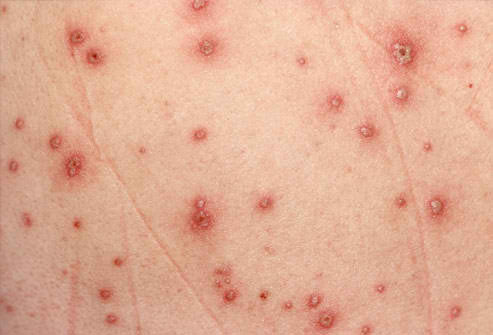
Chicken Pox: How Does It Looks Like?

Chicken pox is a very common childhood virus infection. It is caused by varicella zoster virus and is extremely contagious. The virus spreads through droplets (exhaled air, coughing, sneezing) and contact with fluid from skin lesion (direct contact, sharing towel etc). The virus can survive outside human body in the environment for few hours.

Once you know that your child's schoolmate has chicken pox with skin rash, it is usually too late to avoid infection to your child unless there is no real close contact between them. This is because the infected child is able to spread the virus even 2 days before the rash appears.

If after contact with a chicken pox child for one week and your child still seems alright, it still does not mean that your child is not infected, as the incubation period for the virus is between 10-21 days. Usually the first symptoms to appear are rather non-specific such as mild fever, body ache, minor cough or flu symptoms. Most people only aware of the infection after the body rash appears.

Chicken pox rash is quite obvious and there are generally three stages. The first rash to appear is like a red dot, which will then progress to blisters that will eventually burst and become crusted (scabs). Typically the rash appears in crops, which means that at one time these three types of rash will appear together.

      Rash appears in crops

       Typical chicken pox rash

Chicken pox rash usually will last for 5 days. The infected child is considered non-contagious once all rashes have become scabs (dry). The infected child usually can return to school/nursery 1 week after the rash first appears.

There is no specific treatment for chicken pox other than symptomatic relief for fever/pain and itchiness. Antiviral is indicated only in some special circumstances such as in immuno-compromised child or when complication occurs.

Chicken pox can be prevented through vaccination. Young children can get the vaccine after 12 months old. For children more than 12 years old or adult, two doses given 6-10 weeks apart is recommended. 

Friday, December 23, 2011

Common Causes of Vaginal Discharge

When a female has symptoms of abnormal vaginal discharge & odor, vaginal pain & itchiness, and/or burning sensation when passing urine, she may be infected by one of these organisms: bacteria, fungus or protozoa parasite.

Bacteria infection in the vagina is called bacterial vaginosis. It is most commonly caused by Gardnerella vaginosis, or less commonly by Bacteroides, Fusobacterium, Ureaplasma, Mycoplasma etc, when the balance of good & bad bacteria in the vagina is disrupted. Besides vaginal irritation, bacterial vaginosis typically produces fishy-smell thin gray/white homogenous vaginal discharge which is adherent to the vaginal wall. It is not considered as a sexually transmitted disease as sexually inactive female can still be infected. However, the risk of infection increases with multiple sexual partners and douching.

      Bacterial vaginosis: white thin discharge, with fishy smell


Vaginal candidiasis is a fungal infection in vagina usually caused by yeast Candida albicans. Certain amount of yeast live in the normal vaginal tract with other bacteria. When the amount of yeast overgrow other bacterias, such as when broad-spectrum antibiotics are taken or poor immunity, vaginal candidiasis can occur. The vaginal discharge is white and curd-like but lack odor. It is quite common and is not considered a sexually transmitted disease.

      Candidiasis: White thick curd-like discharge


Trichominiasis is caused by infection of a protozoa called Trichomonas vaginalis. It typically produces greenish & yellowish foul-smelling vaginal discharge and causes significant pain during sexual intercourse. It is a sexually transmitted disease and can affect male as well. It is said that 70% of infected female have no symptoms though.

      Strawberry Cervix: typical in Trichomoniasis

All three types of infection can occur during pregnancy, and are known to increase the risk of preterm labour and low birth weight. To know what type of organism it is, vaginal fluid/discharge can be taken and study under a microscope. 

Bacterial vaginosis is the commonest cause of vaginitis, followed by candidiasis and trichomoniasis. Sometimes it is not easy to differentiate them without lab tests.

These infection can be treated when the type of culprit is identified or suspected:
  • Bacterial vaginosis: 
    • oral metronidazole 500mg twice a day for 7 days OR
    • oral metronidazole 2g as single dose OR
    • oral clindamycin 300mg twice a day for 7 days OR
    • topical clindamycin (cream/suppository) at bedtime for 3 nights
  • Vaginal candidiasis: all types of anti-fungal (oral OR topical - in the vagina)
    • oral fluconazole 150mg single dose OR
    • oral itraconazole 200mg twice a day for one day OR
    • anti-fungal cream/suppository at bedtime usually for 3-7 days
  • Trichomoniasis: 
    • oral metronidazole 500mg twice a day for 7 days OR
    • oral metronidazole 2g as single dose

Most infection can recur after treatment. Sometimes sexual partners have to be treated as well. For treatment during pregnancy, please consult your doctor.

Sunday, October 30, 2011

Urethral Discharge: Is it Urethritis?

Urethritis is typically a sexually transmitted infection, but not always. It can be divided into gonococcal urethritis (GU) and non-gonococcal urethritis (NGU).

Gonoccal urethritis is caused by the bacteria Neiserria gonorrhea, while NGU can be caused by other bacterias include Chlamydia, Ureaplasma, Mycoplasma and even syphilis etc.


Both GU and NGU usually produce similar symptoms, though some infected people does not have any complains. The most common symptoms are:
  • urethral /vaginal discharge
  • urethral/ vaginal itchiness / pain
  • dysuria (pain when passing urine)

Due to certain sexual practice, patients may also have symptoms (pain and discharge) at the pharynx, anus or rectum.

Sometimes the infection may spread to the adjacent organs such as bladder (cystitis), testis (orchitis), epididymis (epididymitis), cervix (cervicitis), ovary (oophroritis) etc.

     Urethral discharge from tip of penis

Useful investigation:
  • urethral discharge swab
    • gram stain (GU - intracellular gram negative diplococci)
    • culture & sensitivity (modified Thayer Martin culture)
    • nucleic acid amplification test (NAAT)
  • urine
    • FEME/culture (not very useful)

Treatment (CDC 2010 guidelines):

Since GU and NGU commonly co-exist. It is preferable to cover both condition when treatment for urethritis is give.

Uncomplicated GU
  • IM ceftriaxone 250mg single dose OR
  • T cefixime 400mg single dose OR
  • T cefuroxime 1g single dose
Plus (for NGU)
  • T azithromycin 1g single dose OR
  • T doxycycline 100mg bd for 7 days

Contact tracing should be done. Those who has recent sexual contact with patients should be treated, even if they are asymptomatic.

Tuesday, September 27, 2011

Hepatitis B in Pregnancy

If you are a female and you are a hepatitis B carrier, is it alright to become pregnant?

The answer is yes. However, you need to take extra precaution during pregnancy and delivery.

Hepatitis B is mainly transmitted through contact with blood, where it is present in high concentration. Other body fluids like saliva, semen, vaginal discharge etc contain less concentration of the virus.


First of all, the spouse of hepatitis B carrier need to check his hepatitis B virus and antibody status. If he is not a carrier and does not have the antibody, then he needs to get the 3 doses of hepatitis B vaccination at the interval of 0, 1, 6 months. When he gets the antibody, viral transmission during sexual intercourse with his carrier wife can be prevented. However, the antibody level may wean off with time and he should check its level regularly.

When a woman who is also a hepatitis B carrier conceive, pregnancy is to continue as usual. Examination and blood test are done to make sure that she does not already reach the stage of chronic liver damage.

If a woman with no known hepatitis B status first found to be infected during pregnancy, then the possibility of an acute infection need to be ruled out. If acute infection occurs in the first trimester, there is a 10% risk of transmission of virus to the baby. If it occurs in the third trimester, the risk is 80-90%. The incubation period of hepatitis B can range from 6 weeks to 6 months.

Generally, the risk of transmission of hepatitis B virus from a carrier mother to her baby is about 10-20%. If immunoprophylaxis (hepatitis B immunoglobulin - HBIG) is given to the baby soon after birth, the risk can be significantly reduced. Thus, every baby born by a hepatitis B carrier mother will receive a dose of HBIG and a dose of hepatitis B vaccine within 12 hours after birth. The vaccine need to be continued for another 2-3 doses later.

Normal vaginal delivery does not significantly increase the risk of hepatitis B virus transmission to the baby compare to Cesarean section. Breast feeding should be allowed and encouraged, as long as the baby get the HBIG and vaccination.

    Hepatitis B virus

If unfortunately the newborn is infected with hepatitis B virus, there is a high chance (90%) that the baby will become a carrier. Not everyone infected will become a carrier. For children between 1-5 years old, the chance to become a carrier is 30%, while for adults, the chance is about 5%. Nevertheless, hepatitis B virus usually does not cause other problems such as malformation or organ malfunction to the infected baby.

If you are not a hepatitis B carrier and would like to get  hepatitis B vaccination during pregnancy, you can do so as the vaccine is reported as safe when given during pregnancy.

Tuesday, September 20, 2011

Herpes Simplex 1 & 2

Herpes simplex is often regarded as a sexually-transmitted infection, but it is not necessarily so. There are 2 types of herpes simplex virus (HSV): HSV type 1 and HSV type 2.

HSV-1 is associated with infection around the mouth and face region, and is also referred to as "oral herpes" or cold sores. It is estimated that about 50% of population in the US has been exposed to HSV-1. Whereas HSV-2 mainly cause infection around the genital area called "genital herpes", and it is sexually-transmitted.. Nevertheless, sometimes HSV-1 can cause genital infection and HSV-2 can cause oral infection. 


     HSV-1: Cold sores

The signs of HSV infection are painful blisters around the skin/mucosa surface of the mouth (oral herpes) or genitalia (genital herpes) which can last 1-2 weeks, often associated with fever. These blisters will break and become ulcers. About 80% of herpes simplex infection however, are asymptomatic (no signs and symptoms).

HSV is transmitted through contact with infected oral or genital secretion, either through kissing, touching, sharing towels, sexual activity etc. Most people are infected with HSV-1 during childhood by close skin contact with infected adults. HSV-2 is mainly transmitted through sexual act. HSV-2 can also spread from an infected mother to the new born during vaginal birth. 

Once a person first get the infection (primary infection), the virus will stay dormant in his/her body forever and it can't be cured. However, the dormant (sleeping) viruses do not cause any problem unless they are "activated". When the viruses are activated, they can spread to other people who come into close contact with the sufferer. The virus reactivation is referred to "recurrence" or "outbreak". The recurrence may or may not produce visible skin lesion thus the sufferer may not even know that he/she has a recurrence. Pain in the skin usually precedes the eruption of skin lesion.


     HSV-2: Genital herpes

The frequency of recurrence varies, sometimes once a month, sometimes once in a few years. Generally the recurrence will be less severe, less frequent with shorter duration over the time as our body get the antibody against it. That means the first or primary infection should be the most severe. HSV-2 causes more frequent recurrence (typically 4-6x a year) compared to HSV-1. Some factors which may trigger the recurrence are emotional stress, fever, illness, sunburn, trauma, surgery and menstruation.

Diagnosis of HSV infection is often made from the history and skin lesion. It can be confirmed by taking swab from the lesion for culture or viral DNA (PCR) test. 

When there is no symptoms or lesions, measuring antibody level (IgG & IgM) through blood test can be done. The presence of IgM means recent or current infection whereas IgG means previous or past infection. Once infected, IgG will only appear in the blood after 2-12 weeks and will persist for life. Thus, it is wise to repeat a negative IgG result after 8-12 weeks if the exposure is there. IgM cannot distinguish HSV-1 and HSV-2 accurately and may cross react with other viruses, thus giving false positive results. The glycoproteinG based antibody test can distinguish both types of virus. However, generally HSV antibody tests do not give very accurate results.

    HSV blisters / vesicles

The blisters caused by HSV can disappear by itself without any treatment. However, anti-viral treatment (oral or cream) may lessen the severity and duration of the signs and symptoms. The anti-viral (eg. acyclovir 400mg tds / 200mg 5x/day) is best given early at the first sign of recurrence or within the first 5 days, for a duration of 5-10 days. Some doctors suggest daily low dose anti-viral medicine (suppressive therapy eg. acyclovir 400mg bd) to reduce the frequency and severity of recurrence, especially for those with recurrence more than 6 times a year.

To reduce the risk of spreading to others, avoid close personal contact and sexual activity during recurrence. The problem is, sometimes recurrence may not produce any skin lesion and no one will be aware of it. Thus, it is advisable to always use condom during sexual intercourse to minimize the transmission of genital herpes. The risk cannot be eradicated totally even when using condom because skin around the genitalia not covered by condom may also spread the virus.

HSV infection cannot be cured but can be controlled or prevented. It is not life-threatening if you are infected with it, unless you are immunocompromised (extremely low immunity).

Friday, September 9, 2011

HPV and Cervical Cancer

Human Papillomavirus (HPV) is a common sexually transmitted infection. If you are sexually active, there is a 50% chance that you have already infected with HPV at some point of time. Most of the time HPV infection will not produce any symptoms and our body immune system can cure it by itself within 2 years time without any treatment (median 8 months). However, some infected people may have genital warts and for female, it may lead to pre-cancerous changes in the cervix. The pre-cancerous changes need further monitoring and possibly treatment.

           Human Papillomavirus

HPV has been widely discussed now because of its link to cervical cancer, though the risk is very small. Besides, HPV is also related to other types of cancer around genital area such as vagina, vulva, penis and anus. 

There are more than 100 types of different HPVs, however, only about 40 has clinical significance to human. Base on their risk to cause cancer, they can be divided into "high risk" type and "low risk" type. HPV type 16 and 18 are the most well known high risk type and both are associated with almost 70% of cervical cancer.

HPVs can infect both male and female equally. It can be transmitted from a person to another through direct contact during sexual intercourse. So if you start to have sex at early age, have multiple sexual partners or if your partner has multiple sexual partners, your risk of getting HPV infection is higher.

Most HPV infection is transient, but about 10% of women may have persistent infection. If the persistent HPV type is HPV 16/18, then the risk of developing cervical pre-cancerous changes is higher. It may progress to cervical cancer if left untreated.

Since long time ago Pap smear has been available as a screening tool for cervical cancer in female. Now Pap smear is still the most important screening test that save lives. Its accuracy is improved with the new liquid base cytology test, which is better than the conventional "scrape and spread on slide" test.

Not long ago, HPV DNA test is recommended as as "add-on" to Pap smear to further help the decision making for doctors in patients with abnormal pap smear result. HPV DNA test is not recommended routinely for women <30 years old unless the Pap smear shows abnormality. It cannot substitute Pap smear as the main cervical cancer screening tool. If the HPV DNA test is positive for high risk HPV type in a patient with "borderline" Pap smear result, then it may prompt further investigation.


    Changes in cervix caused by HPVs

HPV infection can be prevented through vaccine. Currently there are 2 types of vaccines available: Gardasil (HPV 6, 11, 16, 18) and Cevarix (HPV 16, 18). HPV 16 & 18 are the most common high risk HPV that account for almost 70% of cervical cancer. HPV 6 & 11 are low risk HPV that can only lead to genital warts.

These vaccines are given in 3 separate intramuscular doses (0, 1-2, 6 months apart). They are found to be 100% effective in preventing pre-cancerous cervix lesion caused by HPV 16 & 18. Thus it should be able to prevent 70% of cervical cancer (as HPV 16 & 18 cause 70% of cervical cancer). It is not 100% prevention from cervical cancer. There are other types of high risk HPVs and many other possible causes for cervical cancer. So Pap smear is still mandatory even after you have received Gardasil or Cervarix vaccination.

Vaccination is best given to girls/women before they are infected with HPV 16 & 18, or in other words, before having their first sex. It can be given as early as 9 years old up to over 40 years old. However, the earlier the better it is.
 

Friday, May 6, 2011

Helicobacter pylori: are you infected?

If you have frequent stomach upset, you may want to check whether you are infected with Helicobacter pylori or not. Since the discovery of this bacteria in early 1980's, it has changed the belief that bacteria cannot survive in the acidic environment of the stomach.


    Helicobacter pylori

Why is H. pylori so important and why should you be treated if you are infected with it? The reasons are:

  • Almost 70-90% of all peptic ulcer diseases are related to H.pylori
    • About 90% of duodenal ulcers are related to H.pylori
    • About 60% of gastric (stomach) ulcers are related to H.pylori
  • If you are infected, you have 10-20% risk to get peptic ulcer disease
  • If you are infected, you have a 1-2% risk of getting stomach cancer

Yes. H.pylori has been classified as class I carcinogen (cancer-causing agent) for gastric cancer, in the same class as smoking causes lung cancer.


    Gastric & duodenal ulcer

Since the bacteria stay in the digestive tract, we can get infected by taking in food/drink contaminated with the bacteria. H.pylori infection produces no symptoms in 30-35% of patients. When it does, it can cause:

  • Dyspepsia (indigestion)
  • Nausea/vomiting
  • Abdominal pain/discomfort
  • Anemia if bleeding from ulcer

It's easy to check whether you are infected or not. The screening test is usually a blood test that check your antibody level against H.pylori. If it is positive, it means that you have current or recent infection, and should be treated.

After treatment, you should check whether the bacteria are eradicated successfully by doing a urea breath test. This should be done at least 4 weeks after finishing treatment. Blood test is not recommended to be used to confirm eradication because the antibody level may remain high up to 2 years after all the bacteria died. Besides the breath test, another test that can be done to confirm eradication is stool antigen test.

If you have severe symptoms that make a doctor suspect ulcer in your stomach/duodenum, then you can straight away go for an endoscopy in which a tube with camera is inserted through your mouth into your stomach to look for the ulcer. At the same time, tissue samples (biopsy) can be taken to check for the presence of H.pylori.


Treatment for H.pylori is called triple therapy, as it is a combination of 3 types of medication (2 antibiotics and 1 anti-acid). It should be taken accordingly for at least 7 days (up to 14 days) or failure of treatment and bacteria resistance can occur easily. If treated rightly, the success rate is up to 90-95%. It is not easy to get the infection again after it has been successfully eradicated. The re-infection rate is only about 1-2%, but it is noted to be slightly higher in children and women.

Monday, March 28, 2011

Shingles: Can it spread?


Shingles and chickenpox share a similarity: they are both caused by varicella zoster virus. Shingles is also called Herpes Zoster. Can shingles spread to you? Well, it’s a bit complicated: shingles cannot spread shingles but can spread chickenpox; chickenpox can spread chickenpox but cannot spread shingles.

In other words, if you haven’t got chickenpox yet, you can get chickenpox from a person with chickenpox or shingles. If you already have chickenpox, of course you won’t get chickenpox anymore and you CAN’T get shingles from a person with shingles. If you already have both chickenpox and shingles before, then you can’t get both anymore.

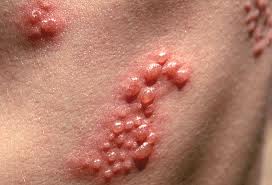
Shingles only can occur in people who already have chickenpox before, where the virus remains “hiding” in the nerve. For some not so well-understood reason (usually related to poor immunity), shingles will pop up as a patch/patches or a band of blisters. It can be at any part of the body but not all over the body. It is more common in elderly >50 years old.

    Blisters in clusters

Shingles is extremely painful, and it usually last 2-4 weeks, sometimes it heals with scar. Anti-viral drugs if given early enough within 72 hours may reduce the severity and duration of shingles. Strong pain-killer is certainly required. Sometimes the pain may last for > 1 month even after the skin lesion has disappeared. This is a complication called post-herpetic neuralgia which can happen in about 10-15% of people with shingles. This troublesome condition may require more potent medicine to control the pain.

Not like chickenpox, shingles cannot spread through the air. It is transmitted through direct contact with the blister fluid. Thus, if you don’t want to get chickenpox, you not only need to avoid contact with chickenpox sufferers, but also shingles sufferers as well. Or you may consider getting a vaccine for chickenpox.

Wednesday, March 16, 2011

Stye vs Chalazion

Both are swelling of the eyelids, can be upper or lower eyelids.

Stye is an infection, usually caused by bacteria in the glands of the eyelids. Chalazion is a swelling caused by blockage at the gland’s opening, thus it is not an infection. They can arise when the eye hygiene is poor, with frequent rubbing the eyes with dirty hand, contact lenses and eye makeup etc. Stye can spread to other people while chalazion can’t.

Stye will show the signs of infection, such as marked redness, pain, swelling and sometimes pus discharge, typically with a yellow dot on red swelling. Chalazion presents as swelling and redness as well, sometimes with pain and it can grow larger than a stye. They both look similar, don’t they?

    Stye: markedly red, note a yellow dot

It is not easy to differentiate between the two. However, no matter what swelling it is, if it looks more likely to be infected, antibiotics will be given.

    Chalazion: larger but mildly red

Treatment for stye and chalazion are generally similar. Since stye is a bacterial infection, it is usually treated with antibiotic eyedrops/ointment. Both conditions can benefit from warm compresses by placing a warm and wet towel over the affected eyelid for 10-15 minutes every 4-6 hours. It is advisable not to break or pinch the swelling on your own.

Stye usually can heal in a week. Whereas for chalazion, it grows and heals slowly and sometimes it can last more than a month. If it can’t heal or get worse, minor surgery can be done to drain the swelling.

Thus,
Stye = infected eyelid swelling
Chalazion = non-infected eyelid swelling
However, it is a challenge to tell whether it is infected or not…

Monday, February 28, 2011

Coxsackie: is it serious?

When your doctor told you that your child has “coxsackie”, most of you will be very worry. Your friends and relatives who get to know this will do whatever they can to avoid contact with your pity child. Perhaps the news about the coxsackie outbreak which took away a few precious lives still lingering in your mind. Is coxsackie infection really so serious? Though it can be serious, but 99.99% of the time, it's NOT.

Coxscakievirus infection is very common, it occurs everyday in tropical country. About 90% of the time, you don't even know that you are actually infected with this virus because it produces only flu-like symptoms and sometimes no symptoms at all. Hundreds of viruses can cause flu-like symptoms (fever, cough, runny nose, sore throat). Doctors are unable to diagnose coxsackievirus infection unless he takes swab from your oral or rectum and send for coxsackievirus test. There is no blisters in the mouth or on the hands or feet whatsoever.

For the rest of 10% of time, coxsackievirus infection will show more specific signs in which we can classify them into a specific disease. Hand-foot-mouth disease, which we are most familiar with, is one of them. It will be more serious if it shows signs of brain (meningitis/encephalitis) or heart involvement. However, involvement of brain & heart is extremely rare, and unlikely to end up in death with prompt treatment.

    Coxsackievirus

So when you hear someone has “coxsackie”, then he/she most probably has hand-foot-mouth disease. Since coxsackievirus is an enterovirus (entero=gut), it is transmitted through fecal-oral route, when the stool of the infected child somehow land in your mouth! Other than this, the oral/nasal secretion and blister fluid also contain the virus . Thus coxsackievirus also can be spread through direct contact with this secretion. For example, when the infected child touch his stool or rub his watery nose, then he touch a toy, then another child touch that toy and put his unwashed hands in his mouth or nose. Besides, the virus can also fly in the air when sneezing or coughing and land in others' nose or mouth.

Coxsakievirus is highly contagious, so it's not uncommon to see small “outbreak” within nursery or kindergarten. Infants are more likely to get it and the risk decreases with age and it's not common in children >10 years old and adult. For hand-foot-mouth disease, the illness usually last 5-7 days, and the child are most contagious for this period of time. So, usually doctors will suggest to avoid contact with the affected child for at least 1 week.

The rash of hand-foot-mouth disease typically start with red dots, which turn into blisters and then later ulcers. It appears on the hands (palm), feet (sole) and mouth (tongue, gum, palate, inner cheek). The rash has a characteristic erythemathous halo (red ring around the blisters). It may last for 5-10 days. Sometimes the blisters only affect the mouth but not the hands or feet (herpangina).


    Blisters/ulcers with typical "red ring" around them

There is no specific treatment for coxsackievirus infection or hand-foot-mouth disease. It can get cured by our own immune system in 7-10 days. Since blisters or ulcers in the mouth can be painful, some infants or small children may have poor feeding which can lead to dehydration (lack of fluids). If this happen, it may warrant hospital admission for intravenous fluid replacement. Medicine usually given are to relieve fever and pain in the mouth.

Coxsackievirus or hand-foot-mouth disease is a mild disease. So, don't be panic.

Friday, February 25, 2011

URTI: Do You Need Antibiotic?

Upper respiratory tract infection (URTI) refers to infection of the upper airway, which include the nose, sinus, throat (pharynx), vocal cord area (larynx) and trachea. It causes symptoms such as running nose, cough, sore throat, fever etc. Generally speaking, it is caused by either virus or bacteria. Viral URTI is self-limiting, or in another words, can cure by itself without specific treatment. Bacterial URTI, most common by streptococcus, requires antibiotic treatment to prevent very rare but serious complication which can affect the heart and kidneys.


Can a doctor differentiate between a viral and bacterial URTI? It’s important to do so but it’s difficult because the signs and symptoms they produce often overlap each other. When a doctor sees a patient with URTI symptoms, streptococcus bacteria infection and pneumonia (lungs infection) are what he/she wants to rule out. What are the clues doctors look for? Streptococcus bacteria URTI affect the throat (pharyngitis), more commonly in children age 5-15 years old, so the main symptom is sore throat. As the nose and larynx are not involved, usually there are no running nose and cough. Some people may think that thick greenish phlegm suggests bacteria infection but this is not true. Even virus infection can produce yellow or green phlegm.

Doctors will check your temperature, as streptococcal URTI usually causes high grade fever (>38.5 C). However, please bear in mind that some viral infection can cause high fever as well. Then doctors will look at your throat to see whether the tonsils are inflamed or enlarged. Both virus and bacteria can cause enlarged tonsils but when there are exudates (white patches) on the tonsils, it makes bacteria infection more likely. Doctors will also look for skin rash and palpate your neck to feel for enlarged lymph nodes. Lastly, doctors will use a stethoscope to listen to your lungs to make sure that your lungs are not involved. In summary, you probably need antibiotic if you have high fever with sore throat, little or no cough nor running nose, has inflamed throat/tonsils with exudates and enlarged neck lymph nodes >1cm.


    Tonsils with exudates   

Virus URTI does not require anti-viral unless in some special situation like new strain AH1N1. Of course antibiotic has no effect in any viral infection. So, if you do not fit into the scenario of streptococcus bacteria infection as described above, then most probably you do not need to worry much. There are hundreds of different viruses which can cause URTI. Common cold, which produces mainly nose symptoms (running nose, nose congestion/block, sneezing), watery eyes, sometimes sore throat and mild cough, is caused by virus. Adults with common cold usually do not even have any fever. Influenza (flu), which is also a virus infection, makes you extremely tired with pain all over the body besides giving you high fever, cough & some stuffy nose. When getting flu, you may think that you are having a serious infection, but actually you don't need antibiotic at all.

No matter what virus it is, it is not so important because the treatment is the same – rest and plenty of fluids. Doctors may give some medicine to relieve the fever, stuffy nose, cough and sore throat. However, you are not going to shorten the duration of the infection by taking these medicines. Viral URTI can last for 3-14 days. The average I would say is 7 days. Usually the symptoms will get better after 3 days. If the symptoms last more than 2 weeks or get progressively worse, the diagnosis of simple viral URTI need to be revised. This situation can be caused by bacteria superinfection, in which bacteria infects the part initially infected by a virus. As a rule of thumb, only about 10% of URTI are caused by bacteria. So, next time when you have fever, runny nose, cough, sore throat etc, give at least 7 days to your body immune system to work and don’t always ask for antibiotics. Antibiotics have side effects, they kill your friendly bacteria and contribute to produce antibiotics-resistant superbugs.

When you actually have a bacteria URTI, will you get better without antibiotic? Yes, you can. Your body immune system will eventually beat the invading bacteria, but it may take longer time. Children with untreated streptococcus URTI have a very small but significant risk of getting complication after the URTI has cured, such as rheumatic fever and glomerulonephritis. Do you need to see a doctor for URTI symptoms? Well, if you are worry, then just go and see one.